
Interesting facts
About the author
Detlev Hensche
Henschel is the bestselling author of several books and has been writing for various magazines since 1982. After 28 years of applied martial arts and philosophy, he lives and thinks extremely and describes himself as a radical realist of the outdoor scene. Minimalist travel does not consist of start-finish, but THE in-between. Few adventurers incorporate science and philosophy into their texts like he does. The doctor of natural sciences grew up in a coastal village.
The Ronindoc philosophy
A true ronin seeks neither fame nor profit.
What is a ronin?
My lived Ronindoc philosophy is a de-dogmatized way of life, pure purpose in life and free personal development based on de-stigmatized life values, traditional historical experiences and personal discipline. As a Ronin, I am not bound by the unimaginative decisions of gerontocratic management levels and autistic politicians and can develop my own approaches using unconventional methods.
Samurai (Jap. „servant„) were the armed attendants of the nobility, later the members of the warrior caste, who lived by a strict code of honor, the „bushido“ (Jap. „way of the warrior„). They underwent a long, excellent training in a wide variety of disciplines.
A true RONIN seeks neither fame nor profit,
does not curry favor with the powerful,
does not seek political power for its own sake
and does not exclude himself in moral judgments.
Rather, he should be as generous as a floating cloud,
ready to act as quickly as the rain
and to be content even with poverty.
He never sets any goals for himself
and never bears a grudge against anyone.
GUDÓ (around 1550)
If samurai became masterless, they were no longer allowed to call themselves samurai, so they referred to themselves as „ronin“ (Jap. literary „wave men“ – Jap. „ro“ for drifting or „like waves tossed to and fro“ and „nin“ for men, meaning „men who are tossed about [in society] – or „outcasts“).
Probably the best-known story on this subject is that of the 47 Ronin. In 1701, Lord Asano no Ako was forced to commit seppuku (hara – kiri = to cut open the belly) after drawing his sword bare in the imperial palace against the court’s master of ceremonies, who was keen on bribes. After his death, his 47 loyal followers, all samurai, suddenly found themselves at the mercy of an extremely insecure world.
All they had left was their intelligence, their discipline and their courage.
Society changed in Japan towards the end of the century before last and the influence of the „traditional“ samurai with two swords gradually waned. More and more of these highly trained and extremely educated warriors became ronin, some became teachers, assassins, monks, bandits or merchants
3.000+
Nights in the tent
5.000 +
km paddled in salt water
20.000
km walked
350.000 +
km driven off road
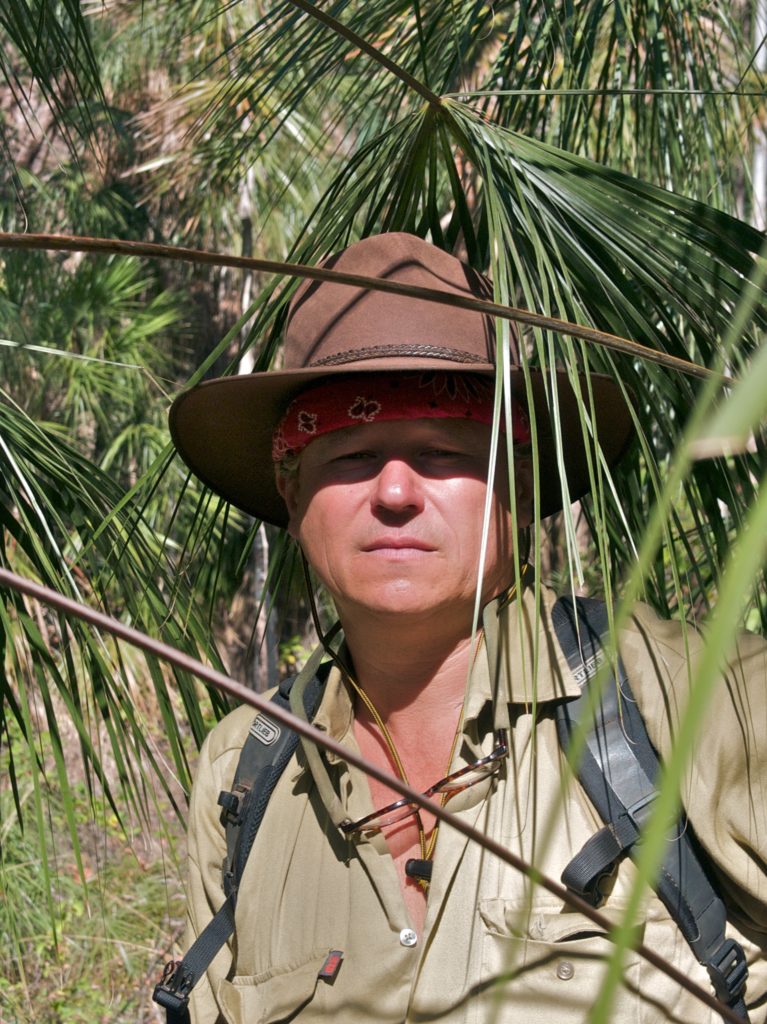
Detlev Henschel
A word from the author
As a natural scientist and author with an ‚adventure problem‘, I have made my fascination with nature and the outside world my life and profession. I am happy that I found this ‚path‘ very early on and am no longer subject to the social Darwinist pressure of today’s do-gooder society.
As an enfant terrible, I was able to enjoy years of stays abroad and expeditions in a world and nature that will never exist again today, and all this without having to constantly think about my pension, which will never be enough anyway.
But after almost three decades of studying martial arts, something has always been there: The unconditional will to survive: survival outdoors and in ‚civilization‘, because despite everything, luck is with the prepared!