
Cactus fruit, a treat between meals
With 190 varieties, Opuntia is the most species-rich genus of the cactus family and has been used as food, fodder and intoxicants for 3000 years. At present, the distribution area is still the Mediterranean region, America, the Caribbean, South Africa and Australia from sea level up to 5,000 metres above sea level, but you never know.
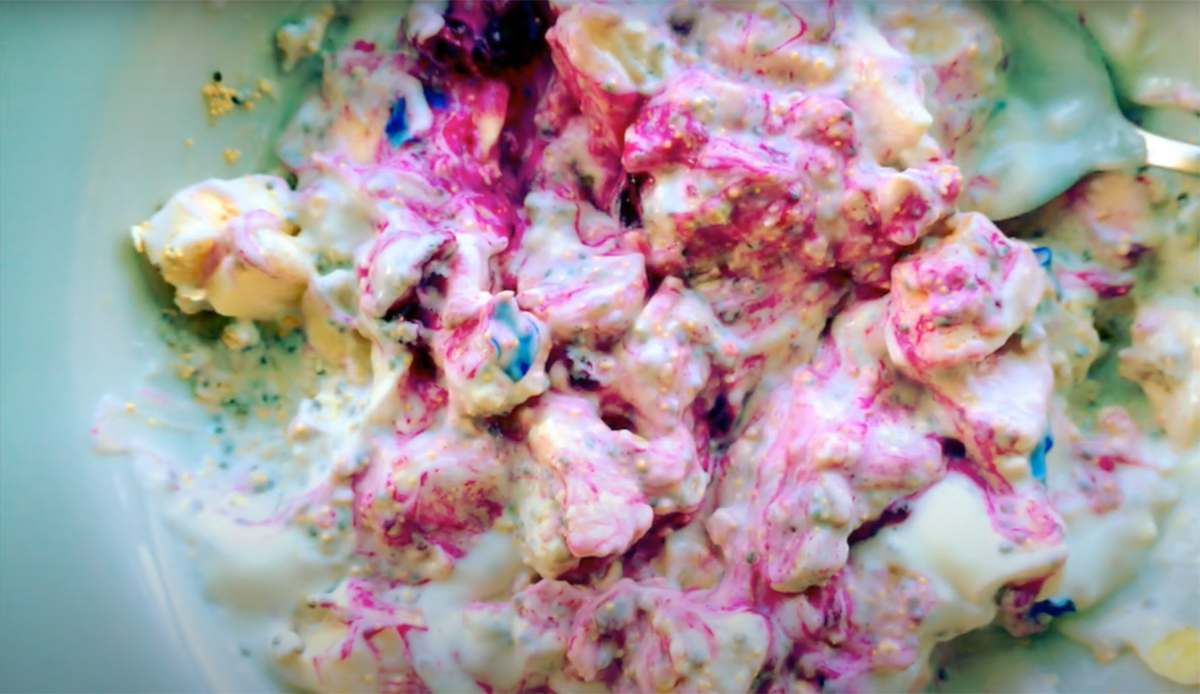
That’s why today, in a politically correct and Greta-correct way, I would like to prepare you for what you will soon be able to harvest on German beaches due to the immense and severe global warming. Namely the fruits of the prickly pear cactus. A tasty paleo snack for the outdoor enthusiast that replaces the muesli bar.
Before the age of large grocery chains, you could buy these fruits everywhere in the open markets around the Mediterranean, but this is becoming increasingly rare because it is difficult to harvest the flavoursome fruit. Depending on the climate, the fruit can be stored fresh or dried for a long time.
The shrubby to tree-like Indian prickly pear cactus (Opuntia ficus-indica) found in the Mediterranean region and the coastal prickly pear cactus (Opuntia littoralis) are easily recognised by their widened, more or less oval, flattened, leaf-like shoots (the platycladia).
Die Triebe beider Arten sind ganzjährig essbar, aber das ist in einem anderen Vlog zu finden, der später erscheint.
Today we have a tasty snack from the coastal prickly pear cactus, which only grows near the beach. This prickly pear cactus has hardly been researched and its consumption is said to have cancer-preventing effects, which was confirmed to me independently by old men in Andalusia and Fuerteventura.
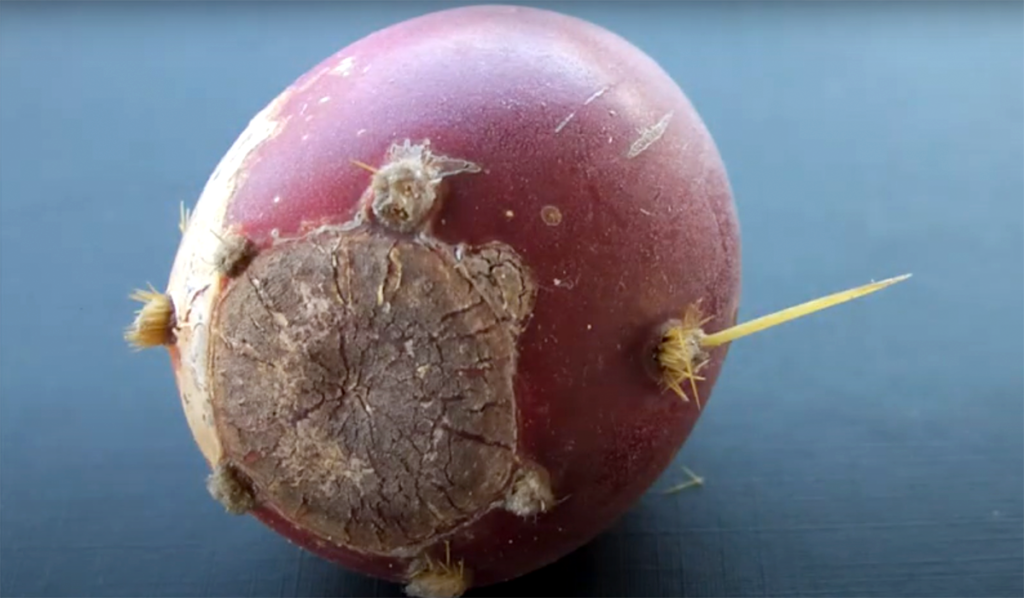
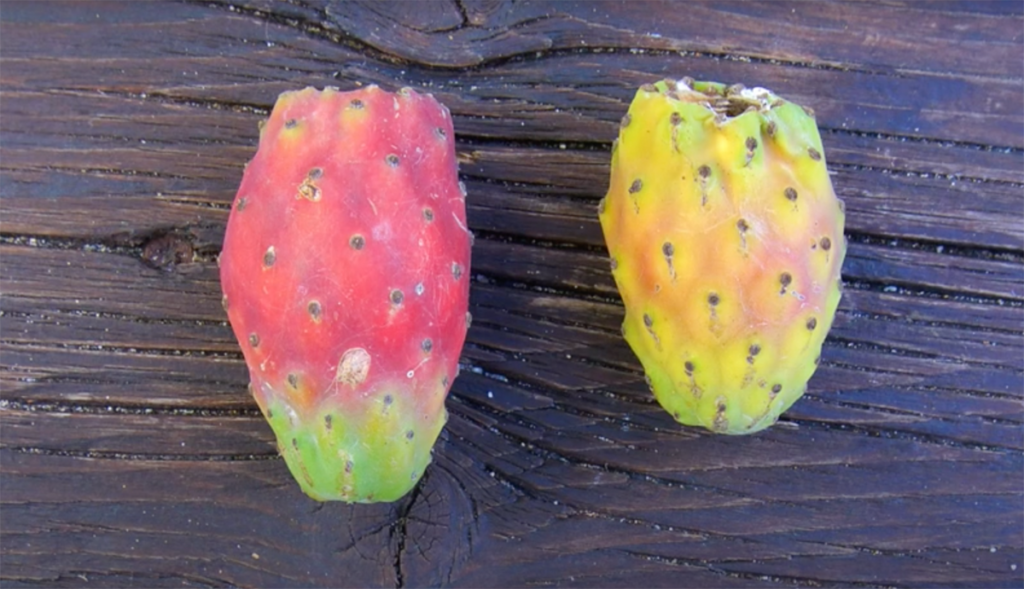
On the smooth surface of the aubergine-coloured, oval-spherical, fleshy fruits are the large, fragile thorns. These are the transformed leaves of the plant, yes exactly leaves! In the leaf axils are the extremely nasty, hair-thin needles (glochids), which are armed with hooks. These tiny needles, called glochids, make harvesting a real pain.

Recipe
Cactus fruit
A treat in between
Today we have a tasty snack from the coastal prickly pear cactus, which only grows near the beach.
This prickly pear cactus has hardly been studied and its consumption is said to have cancer-preventing effects, which was confirmed to me independently by old men in Andalusia and Fuerteventura.
It’s a pain in the arse to get to the fruit, but the reward is a deliciously sweet, vitamin-rich experience that is always available in sufficient quantities for most of the year. The fruits can be harvested delicately and preferably without a dodder, simply by hand, which is often rewarded with the hair-thin needles in the skin, which cannot be pulled out because they have barbs and break off immediately. Or you can use two sticks as tongs and a knife or a pair of barbecue tongs and a pair of scissors.
The grainy pulp either goes straight into your mouth, but can of course be crushed and enjoyed in muesli, or you can sieve the seeds and dilute the pulp with water to quench your thirst. The whole thing is really trendy with gin.
In Sicily, there is a liquor called ficodi, which is made from Opuntia fruit. As I said, people always get drunk. That’s why Mexico has had the Colonche, a spirit distilled from prickly pear cactus fruit, for thousands of years. And even on St Helena, where Napoleon was interned, a spirit is distilled from it: Tungi schnapps.
I’ll try to burn this when I’m back in Spain in November, and there’s also the pozol and tesgüino from the Maya, which should definitely not be forgotten.
In Spain, the fruits and the oval, fleshy shoots help to lower blood sugar and are therefore an alternative in the treatment of diabetes.
You can find more dishes with history and recipes here in my e-book on Edible Wild Plants – Delicious from Nature.
If you have any questions, suggestions or requests … let me know – Contact.
If you liked the video I would be very happy about a thumbs-up and please subscribe to the page.